
Obstetric (pregnancy) ultrasound
Quick answer: An obstetric scan is a general pregnancy ultrasound that checks the baby's heartbeat, position, size, the placenta and the fluid around the baby. Doctors order it at various points in pregnancy to check how the pregnancy is going, or for bleeding, pain or reduced movements.
- SampleImaging (no sample)
- TakesAbout 15 to 30 minutes
- Before the testYou may be asked to come with a comfortably full bladder; follow the instructions you are given.
- In fertility careIt is a routine part of pregnancy care, including after IVF.
How the test is done
- 1You may be asked to come with a comfortably full bladder in early pregnancy
- 2You lie on your back with your belly uncovered
- 3Gel is spread on your belly and the probe is moved over it
- 4The sonographer checks the heartbeat, measures the baby, and looks at the placenta and fluid
What your results can mean
Reading your report
Measurements are compared with what is expected for the stage of pregnancy; your doctor will explain what your report means for you and your baby.
If the result is outside the usual range
The scan can show the baby's heartbeat and size, the number of babies, the baby's position, where the placenta lies, such as a low-lying placenta, and whether the fluid level looks normal. Some findings need a more detailed scan.
Who usually has this test
Pregnant women at routine points in pregnancy, and those with bleeding, pain, reduced movements or a bump that measures unexpectedly.
Risks and aftercare
Pregnancy ultrasound uses no radiation and is considered safe; you may need to pass urine soon after if your bladder was full.
Names and options
Also called: obstetric scan, pregnancy scan, OB scan, USG obstetrics
Listed by the hospital as
- OBSTETRICS SCAN
Questions about this test
How many scans are usually done in pregnancy?
Most pregnancies have a dating scan, an NT scan around 11 to 14 weeks and an anomaly scan around 18 to 22 weeks. Extra scans are added if there is a medical reason.
Can an obstetric scan show a low-lying placenta?
Yes, it shows where the placenta lies. A low-lying placenta seen in mid-pregnancy often moves up, and a later scan checks this.
Can I learn the baby's sex on a pregnancy scan in India?
No, revealing the baby's sex is illegal in India under the PCPNDT Act, and scan centres will not tell you. The scan is only used to check the baby's health.
Related tests
Tamara Hospital & IVF Centre, Rajajinagar
34/3, 10th Cross Road, opp. Vardhaka Sardar Patel School, 1st N Block, 2nd Stage, Rajajinagar, Bengaluru 560010
The hospital is open 24 hours. Call before you come to check the timing for your scan or sample collection.
Get directions ↗IVF Pulse fertility care at Tamara Hospital →
 Reception
 Waiting area
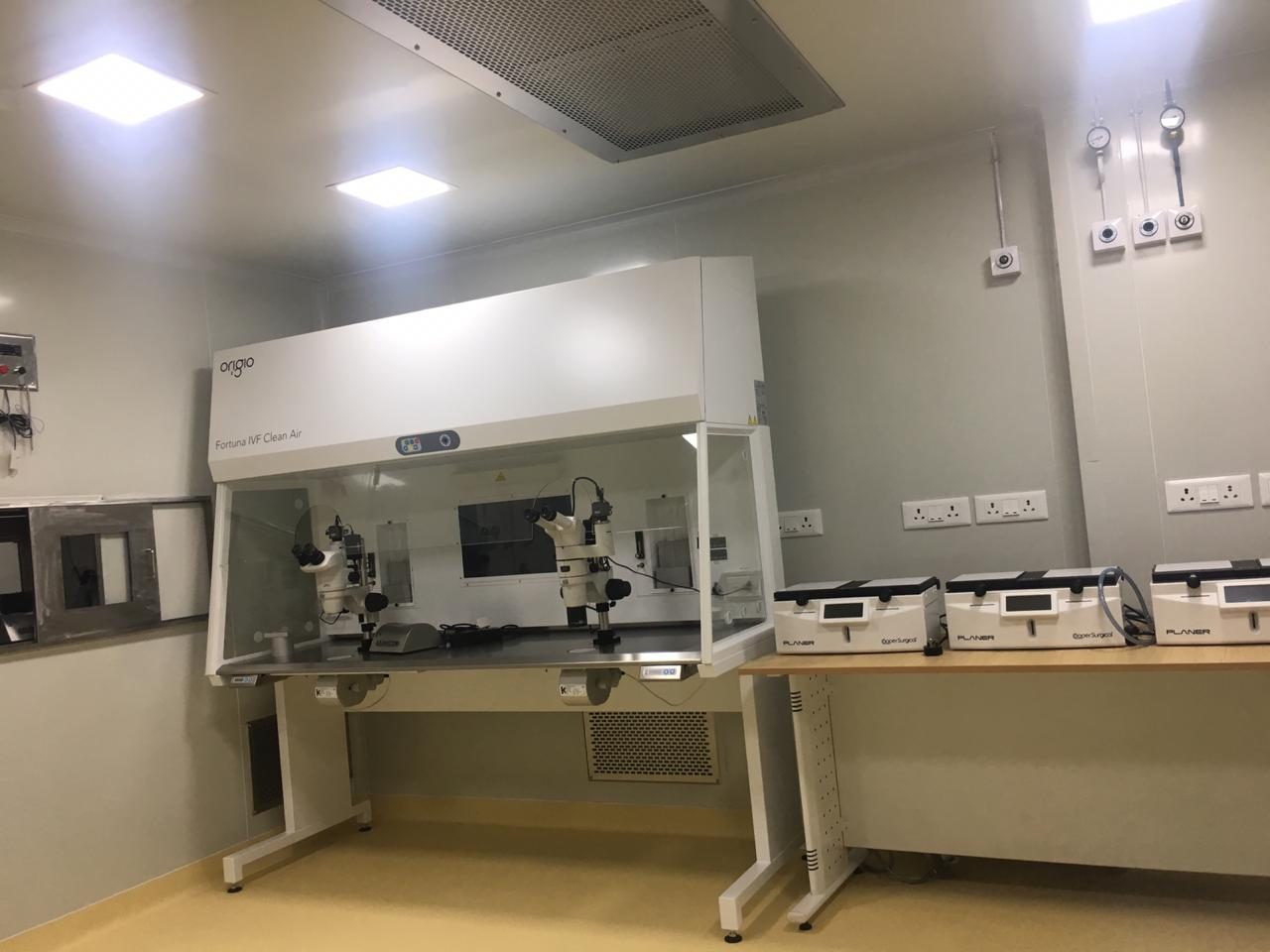 IVF lab
This page explains each test in general terms so you know what to expect. It is not medical advice: your doctor decides which tests you need and what your results mean. Reference ranges differ between laboratories. Updated 4 November 2026.