ICSI treatment: when one sperm is placed directly into the egg
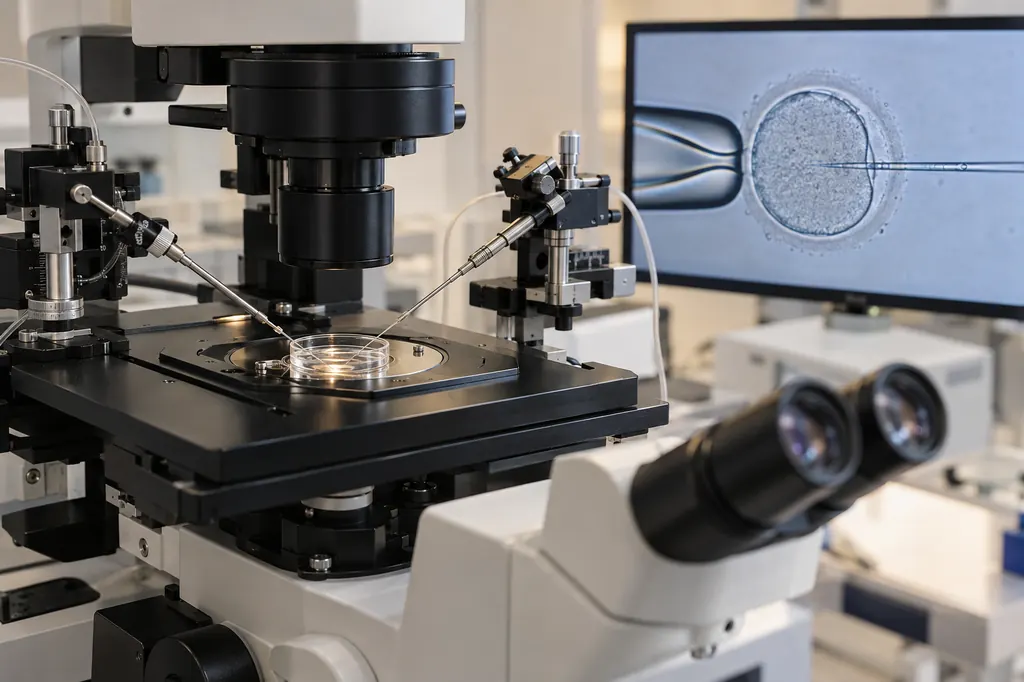
ICSI treatment (intracytoplasmic sperm injection) is a laboratory step within IVF in which an embryologist injects a single sperm into each mature egg. It is mainly used when sperm count or movement is very low, or when fertilisation failed in a previous IVF cycle.
- Part of
- An IVF cycle
- Done by
- An embryologist, in the lab
- Extra procedure for you
- None — same as IVF
- Main use
- Male factor infertility
What is ICSI treatment?
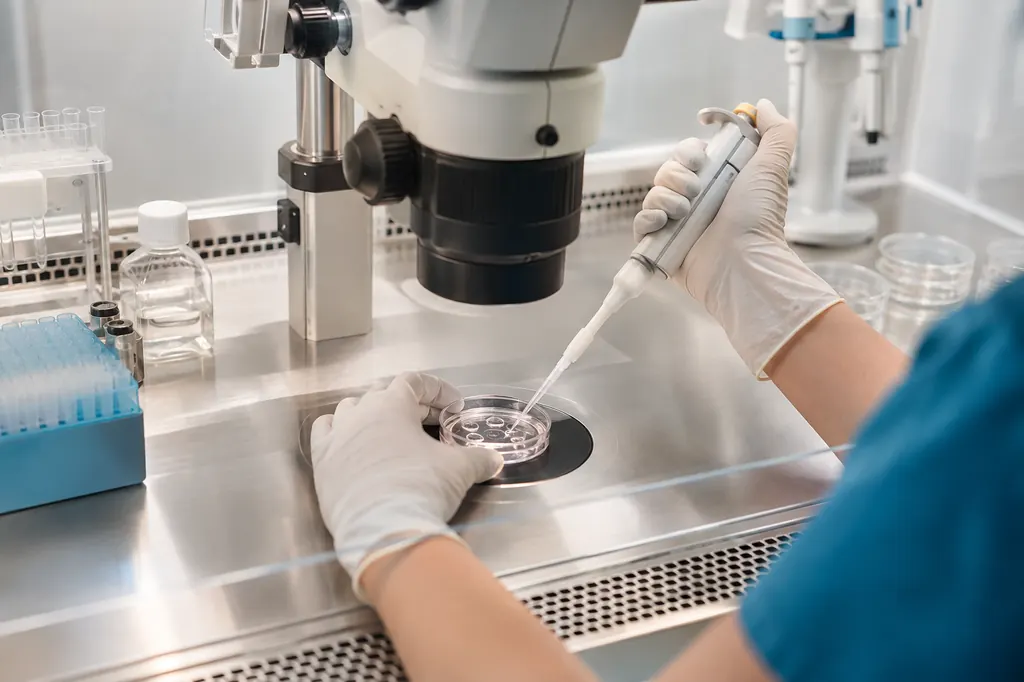
In standard IVF, each egg is placed with thousands of sperm and fertilisation happens on its own. With ICSI the embryologist chooses one sperm and injects it directly into the egg, so fertilisation no longer depends on the sperm being able to swim to and penetrate the egg.
ICSI was developed for severe male infertility and is very effective for it. Over time many clinics started using it for every case, but large studies show no benefit when sperm is normal — so it should be a choice made for a reason, not by default.
Who ICSI may help
- Very low sperm count or poor movement
- Sperm retrieved surgically (for example after micro-TESE)
- Previous IVF cycle with low or no fertilisation
- Frozen sperm of limited quality
- When eggs are being tested genetically (PGT)
Good to know. When sperm is normal, guidelines do not recommend ICSI routinely: it has not been shown to give better results than standard IVF, and it costs more.
How to prepare
- The male partner should have a recent semen analysis, and sometimes a repeat test.
- If sperm counts are very low, genetic tests (karyotype and Y-chromosome microdeletion) may be advised before treatment.
- Avoid ejaculation for 2–5 days before the day of egg collection, unless told otherwise.
- If sperm will be retrieved surgically, the procedure is planned together with the egg collection, or sperm is frozen in advance.
The ICSI procedure, step by step
IVF stimulation and egg collection
Exactly as in standard IVF.
Sperm preparation
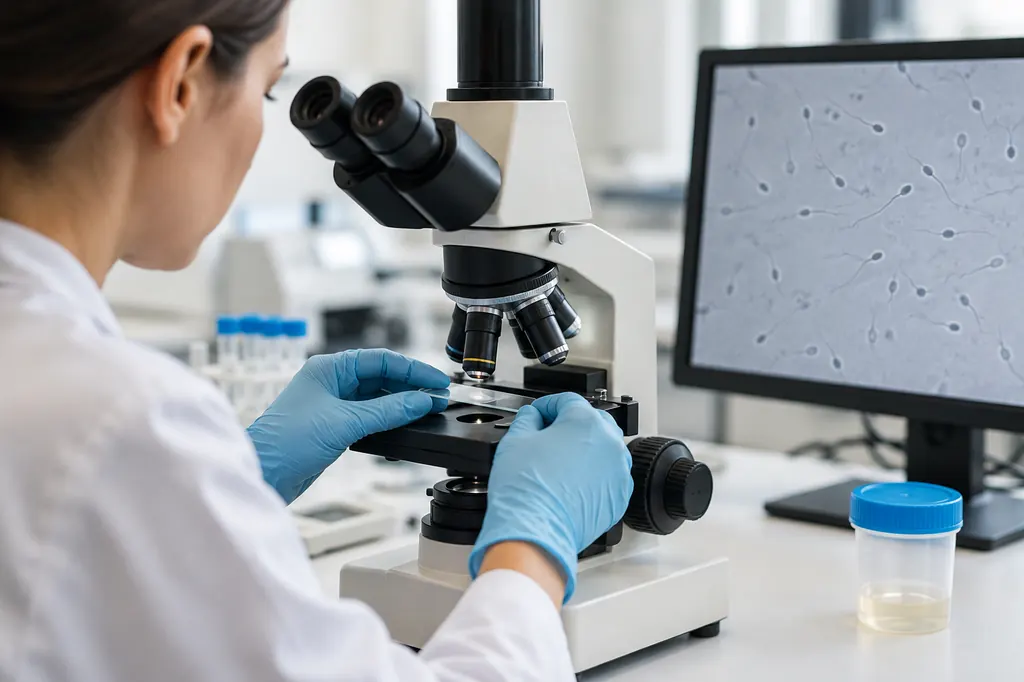
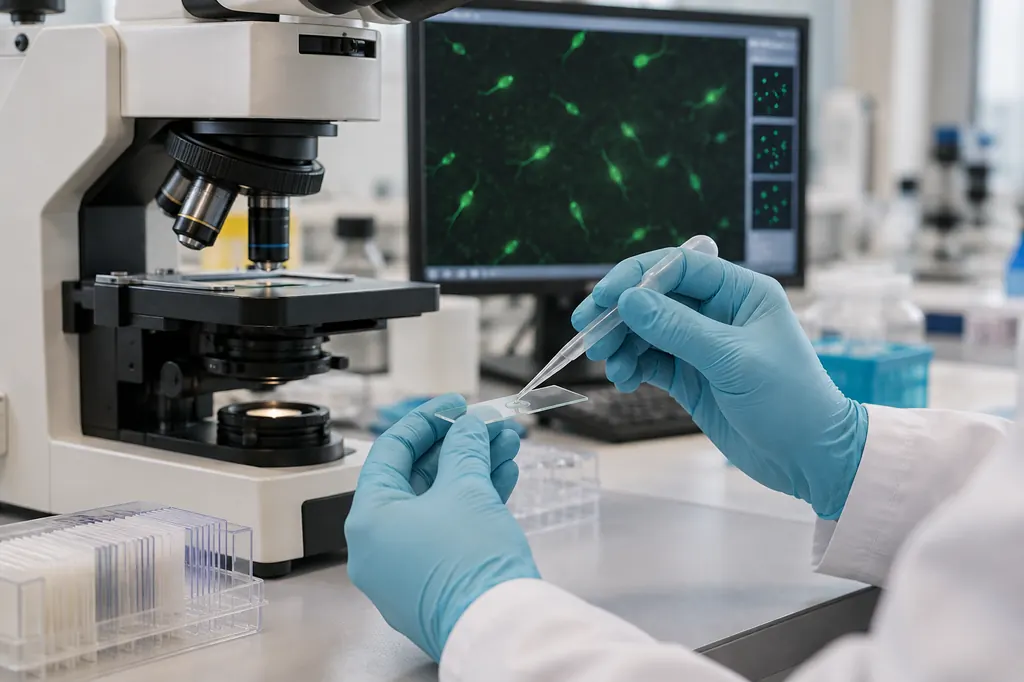
The semen sample (or surgically retrieved sperm) is washed and the best sperm are selected.
Injection
Under a microscope, each mature egg is held steady and a single sperm is injected with a fine glass needle.
Fertilisation check
The next day the lab checks which eggs fertilised normally.
Culture and transfer
Embryos grow and are transferred or frozen, as in IVF.
What to expect
- For you, an ICSI cycle feels the same as an IVF cycle.
- Not every injected egg will fertilise; a small number can be damaged by the injection.
After an ICSI cycle
- Your recovery is the same as for IVF.
- The lab calls the next day with how many eggs fertilised.
- Some injected eggs may not fertilise or develop; this is expected.
Benefits, limitations and risks
Benefits
- Fertilisation with very few sperm, or sperm that cannot swim well
- Makes treatment possible with surgically retrieved sperm
- Reduces the chance of total fertilisation failure in some couples
Limitations
- No advantage over IVF when sperm is normal
- Adds cost
- Does not improve egg quality, so age still matters most
Risks and side effects
- The same risks as IVF for the woman.
- Studies suggest a small increase in some birth defects and genetic conditions compared with natural conception; part of this may come from the underlying sperm problem rather than ICSI itself.
- Some causes of male infertility can be inherited by a son — genetic testing may be offered first.
ICSI success rate: what affects it
With severe male factor, ICSI gives fertilisation rates similar to standard IVF with normal sperm. After fertilisation, success depends mostly on egg quality and the woman's age.
Alternatives to discuss
What affects the cost of ICSI in Bangalore
- The clinic and city
- Medicines, which vary with dose and protocol
- Tests and scans needed before and during treatment
- ICSI charge added to the IVF cycle
- Surgical sperm retrieval, if needed
Before you start, ask for a written, itemised estimate that lists what is included and what could cost extra, such as medicines, freezing, storage and add-ons. Prices vary widely between clinics and cities. Estimate your costs with our calculator.
Questions to ask your doctor
- Why do you recommend ICSI in our case rather than standard IVF?
- Is there any extra charge for ICSI?
- Should the male partner have genetic tests before treatment?
Frequently asked questions
What is the full form of ICSI?
ICSI stands for intracytoplasmic sperm injection: a single sperm is injected into the cytoplasm (the inside) of an egg.
Is ICSI better than IVF?
Only when there is a sperm problem or a previous fertilisation failure. Otherwise results are similar and ICSI simply costs more.
Does ICSI hurt?
No. The injection is done to the egg in the lab; your procedures are the same as IVF.
Can ICSI work with very few sperm?
Yes. It needs only one healthy sperm per egg, which is why it is used with surgically retrieved sperm.
Can ICSI choose the best sperm?
The embryologist picks a normal-looking, moving sperm, but appearance cannot show genetic quality.
Does ICSI pass male infertility to a son?
Some causes, such as Y-chromosome microdeletions, can be inherited by a son. Genetic testing and counselling help you understand your own situation.
Is ICSI always done with PGT?
No. ICSI is often used when embryos will be tested, but most ICSI cycles do not involve genetic testing.
Not sure if ICSI is right for you?
See a fertility doctor at an IVF Pulse centre in Bangalore: Kalyan Nagar (HRBR Layout), RR Nagar and Rajajinagar (at Tamara Hospital). Nothing to pay when you book, and you can change the time on WhatsApp.