Fertility tests for women and men: the complete workup
Fertility tests for women and men check the main things needed for pregnancy: ovulation and egg reserve, open fallopian tubes, a healthy uterus, and sperm. Both partners should be tested together, because male factors are involved in a large share of couples.

- Who
- Both partners
- When
- After 12 months of trying (6 if 35+)
- Main tests
- Hormones, scan, tubes, semen
- Time
- Usually within one cycle
What do fertility tests check?
Infertility is usually defined as not conceiving after one year of regular unprotected sex. A workup is a structured set of tests that looks at each step needed for pregnancy: an egg being released, sperm reaching it, the tubes allowing them to meet, and a healthy uterus for the embryo.
Testing both partners together saves time. Male factors contribute in a large share of couples, and a semen analysis is one of the simplest and cheapest tests available. Most workups can be completed within one menstrual cycle.
Who Fertility tests may help
- Couples trying for 12 months without pregnancy
- Women 35 or older after 6 months of trying
- Irregular or absent periods
- Known endometriosis, pelvic infection or surgery
- Known male fertility concerns
Good to know. You do not have to wait a year if you already know of a problem, such as absent periods or previous testicular surgery. See a doctor sooner.
How to prepare
- Note your cycle dates — some blood tests are done on day 2–3 and others about a week before your period.
- Bring previous reports, scans and any treatment details.
- The male partner should avoid ejaculation for 2–7 days before the semen test.
- Write down your questions and your medical, surgical and family history.
Fertility tests for couples, step by step
History and examination
Medical, menstrual and lifestyle history for both partners.
Hormone tests
Day 2–3 FSH, LH and estradiol, AMH, thyroid and prolactin, and a progesterone test to confirm ovulation.
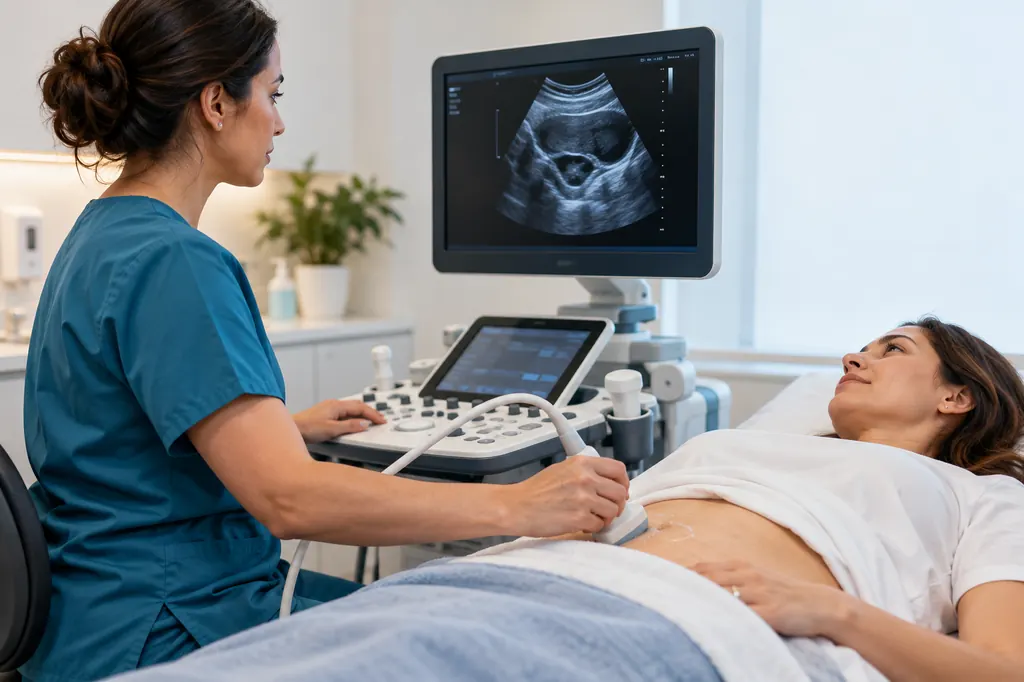
Pelvic ultrasound
Checks the uterus, ovaries and antral follicle count.
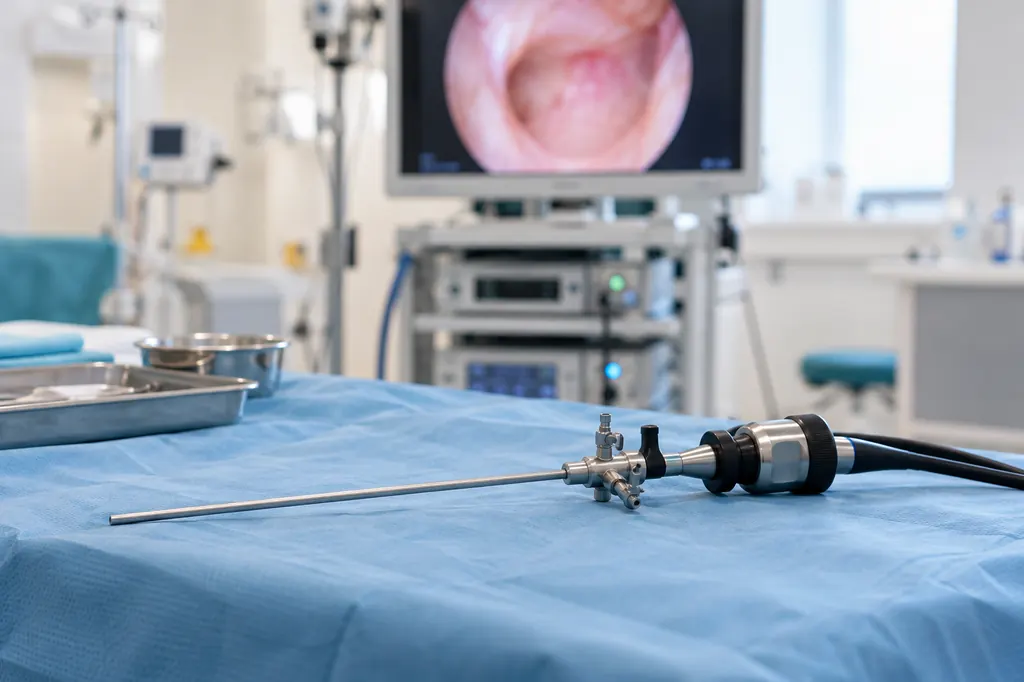
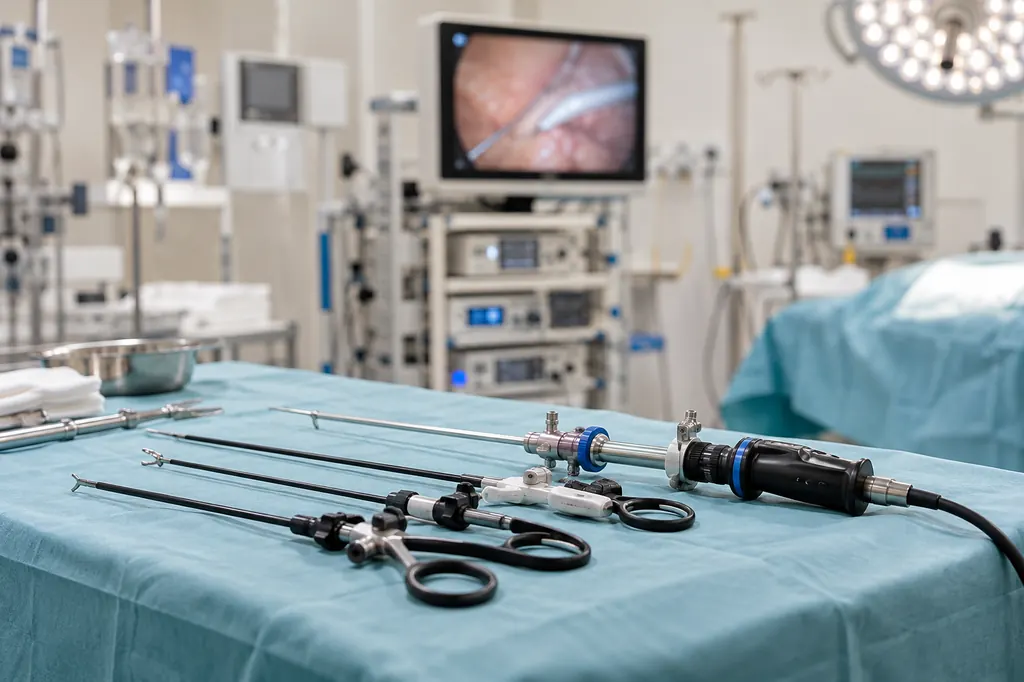
Tube test
An HSG X-ray or HyCoSy, or laparoscopy if needed.
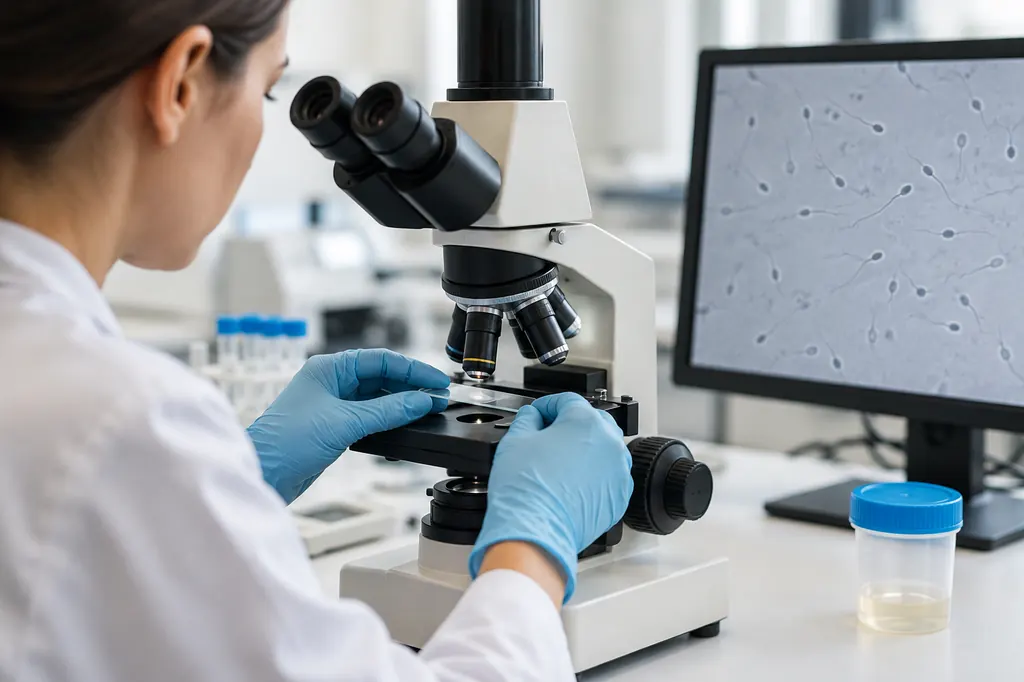
Semen analysis
Count, movement and shape, compared with WHO reference values.
Plan
Results are combined to suggest the next step.
Understanding your results
- AMH and antral follicle count
- Estimate egg reserve and how the ovaries may respond to IVF medicines; they do not predict natural fertility on their own.
- Mid-luteal progesterone
- Confirms whether ovulation happened in that cycle.
- Thyroid and prolactin
- Imbalances can disturb ovulation and are usually treatable.
- HSG or HyCoSy
- Shows whether the tubes are open and the uterine cavity is normal.
- Semen analysis
- Count, movement and shape compared with WHO reference values; abnormal results are repeated.
What to expect on the day
- Most tests are blood tests and scans; the tube test can cause cramps for a short time.
- Results are usually ready within one or two weeks.
Benefits, limitations and risks
Benefits
- Finds treatable causes, such as ovulation or thyroid problems
- Guides the right first treatment
- Avoids unnecessary treatment
Limitations
- No cause is found in about a quarter of couples
- Some tests cause brief discomfort
- Results guide decisions but cannot predict outcomes exactly
Risks and side effects
- Tube tests carry a small risk of infection; antibiotics may be given.
What the results mean for treatment
Many couples find a clear cause, and some have more than one. In about a quarter of couples no cause is found — called unexplained infertility — and treatment can still help.
What affects the price of a fertility tests
- Number of tests ordered
- Whether a tube test is HSG, HyCoSy or laparoscopy
- Repeat tests
Before you book, ask the lab or clinic for the price of each test, whether repeat tests cost extra, and how soon results will be ready. Prices vary between labs and cities.
Questions to ask your doctor
- Which tests are needed for both of us, and which can be skipped?
- Is the tube test necessary before treatment?
- What do our results mean for our chances without treatment?
Frequently asked questions
Which fertility tests are done for women?
Usually day 2–3 hormone tests (FSH, LH, estradiol), AMH, thyroid and prolactin, a progesterone test to confirm ovulation, a pelvic ultrasound with antral follicle count, and a tube test such as HSG.
Which fertility tests are done for men?
A semen analysis first. Depending on the result, hormone tests (FSH, LH, testosterone), a repeat analysis, genetic tests and an examination by a urologist may follow.
When should we get fertility tests?
After 12 months of regular unprotected sex, or after 6 months if the woman is 35 or older. Sooner if there is a known problem.
Does the male partner need testing?
Yes. A semen analysis is simple and should be done early, at the same time as the woman's tests.
Is AMH alone enough to judge fertility?
No. AMH estimates egg reserve and response to IVF medicines, but it does not predict natural fertility well on its own.
Do I need to stop trying while having tests?
Usually not. Tell the clinic if you might be pregnant before an HSG or X-ray test.
What is unexplained infertility?
When standard tests are normal but pregnancy has not happened. Treatment options still exist, from IUI to IVF, depending on age and duration.
Not sure if Fertility tests is right for you?
See a fertility doctor at an IVF Pulse centre in Bangalore: Kalyan Nagar (HRBR Layout), RR Nagar and Rajajinagar (at Tamara Hospital). Nothing to pay when you book, and you can change the time on WhatsApp.