IVF PulseFree Second Opinion

How it works

How IVF works at IVF Pulse

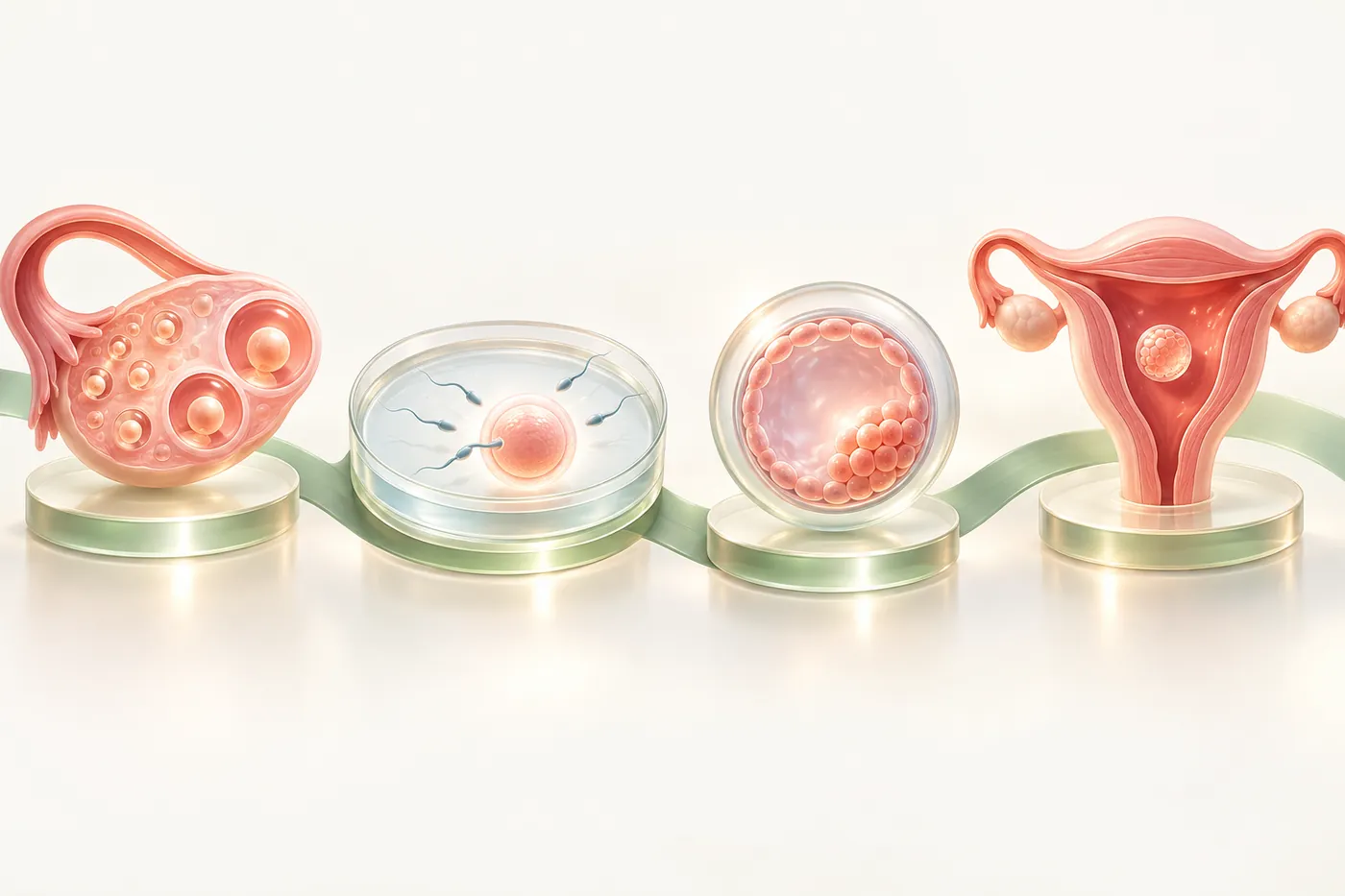
From your first consultation to your pregnancy test, here is every step of IVF: what happens, how long it takes, and who you will see. The treatment cycle itself takes about four weeks.

Conceptual illustration of the IVF journey: ovary, egg and sperm, embryo and womb
Conceptual illustration · not to scale
8 stepsFrom first visit to pregnancy test
About 4 weeksFor one treatment cycle
3 clinicsKalyan Nagar, RR Nagar, Rajajinagar
5 specialistsFertility and gynaecology

The IVF journey at a glance

Tap a step to read what happens.

  1. 1First consultationOne visit
  2. 2Fertility testsUsually 1 to 2 weeks
  3. 3Your treatment planOne visit
  4. 4Ovarian stimulationAbout 10 to 12 days
  5. 5Egg collectionOne morning
  6. 6Fertilisation and embryo growth5 to 6 days in the lab
  7. 7Embryo transferA few minutes
  8. 8Pregnancy testAbout 9 to 14 days after transfer

Each step, explained

What happens at each stage, and what helps.

One visit

Step 1. First consultation

You meet a fertility specialist, together with your partner if you have one. The doctor goes through your history, any previous reports and treatment, and what you want to happen next. You leave knowing which tests you need.

Illustration of a couple talking through their history with a fertility doctor
Illustration

Good to know

  • Bring previous scans, blood reports and treatment summaries
  • Both partners are welcome
Book a consultation →
Usually 1 to 2 weeks

Step 2. Fertility tests

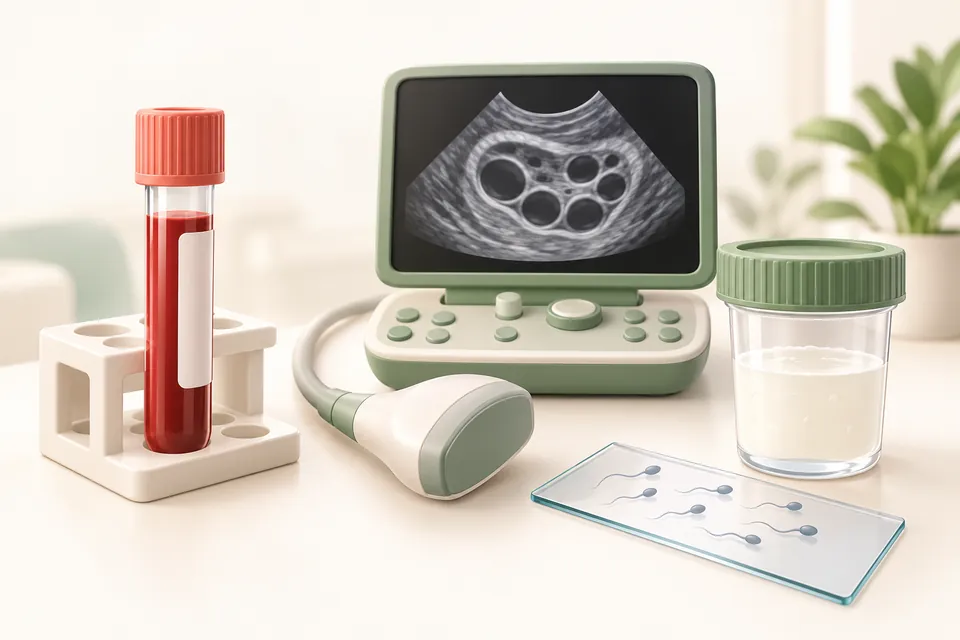
Tests show how your body is working before anything is planned. For the woman this usually means hormone blood tests such as AMH, and an ultrasound scan to count antral follicles. For the man it means a semen analysis. Some people also need a test of the fallopian tubes.

Illustration of fertility tests: a blood sample, an ultrasound scanner and a semen sample
Illustration

Good to know

  • Some blood tests are timed to day 2 or 3 of your period
  • Results go into one plan, so both partners are tested
Check your AMH or semen report →
One visit

Step 3. Your treatment plan

Your doctor explains what the results mean and which treatment fits: IVF, ICSI, IUI or something else. You get the medicines, the timings and the costs, and you can ask anything before you decide.

Illustration of a couple and doctor marking treatment dates on a calendar
Illustration

Good to know

  • Ask for the full cost, including medicines, embryo freezing and storage
  • Take time to decide. Nothing starts until you are ready
Estimate the cost of IVF →
About 10 to 12 days

Step 4. Ovarian stimulation

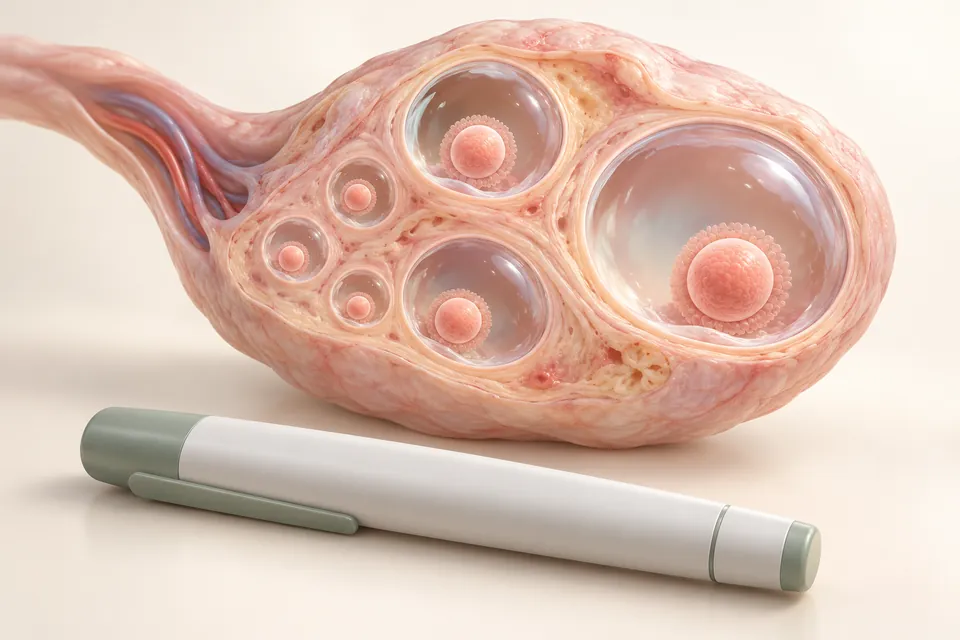
Daily hormone injections, usually given at home, help several eggs grow at once. Every few days you come in for a scan, and sometimes a blood test, so the doctor can adjust the dose. When the follicles are ready, a final trigger injection is timed for egg collection.

Conceptual illustration of an ovary with growing follicles and an injection pen
Conceptual illustration · not to scale

Good to know

  • Most people keep working through this stage
  • Ask about OHSS warning signs before your trigger
What your injection dose means →
One morning

Step 5. Egg collection

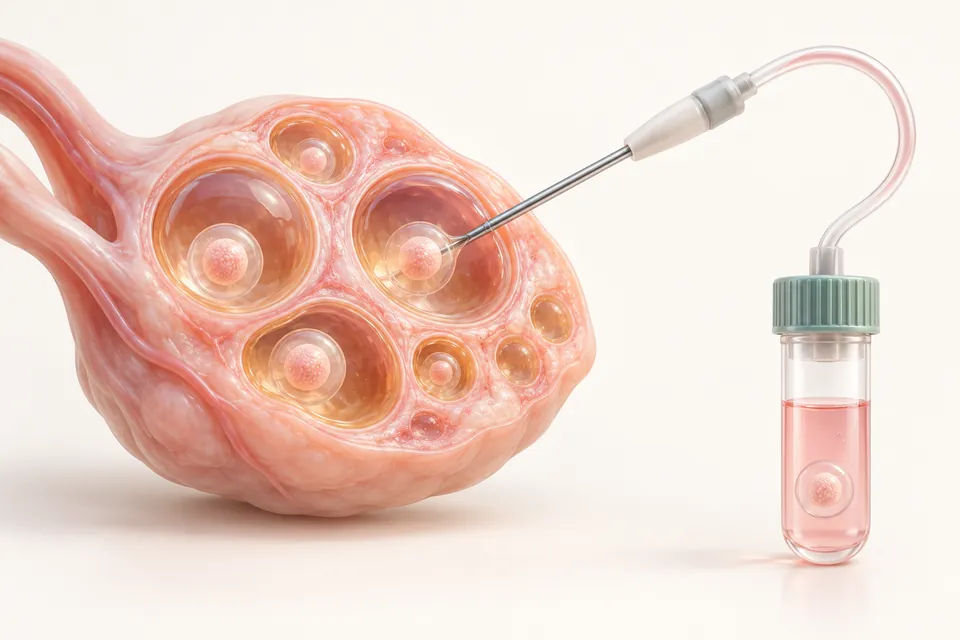
The eggs are collected through the vagina with a fine needle guided by ultrasound, while you are sedated. It takes a short time and you go home the same day. If a fresh sperm sample is needed, your partner gives it the same morning.

Conceptual illustration of eggs being collected from follicles into a tube
Conceptual illustration · not to scale

Good to know

  • Plan to take the day off, and the next day if you can
  • Mild cramping afterwards is common
How many eggs were mature? →
5 to 6 days in the lab

Step 6. Fertilisation and embryo growth

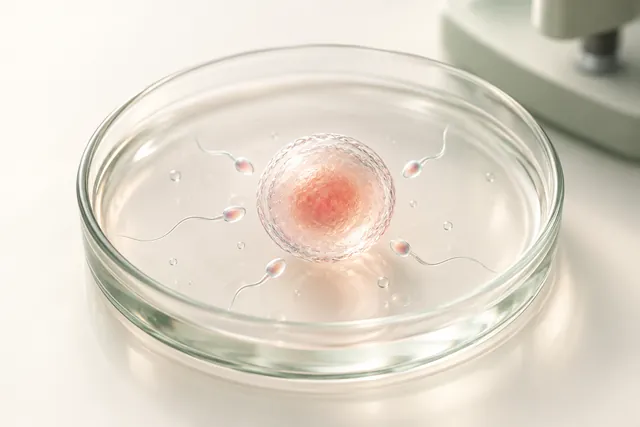
In the lab, eggs and sperm are brought together by IVF, or one sperm is placed in each egg by ICSI. The embryos are watched as they grow, ideally to day 5. The clinic keeps you updated, and good embryos that are not transferred can be frozen.

Conceptual illustration of sperm around an egg in a laboratory dish
Fertilisation
Conceptual illustration of embryos at different stages growing in laboratory dishes
Embryo growth

Conceptual illustrations · not to scale

Good to know

  • Not every egg fertilises, and not every embryo reaches day 5. This is normal
  • Ask whether genetic testing (PGT) is right for you
Why numbers drop from eggs to embryos →
A few minutes

Step 7. Embryo transfer

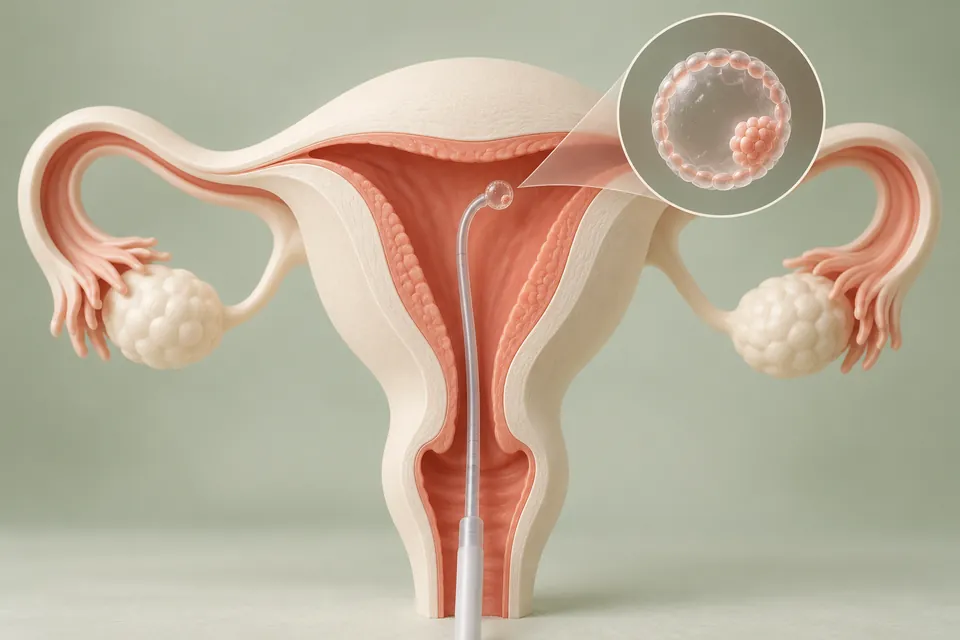
An embryo is placed in the womb through a thin, soft tube, guided by ultrasound. It feels much like a smear test and usually needs no anaesthesia. In a fresh cycle this happens a few days after egg collection. A frozen embryo can be transferred in a later cycle.

Conceptual illustration of an embryo being placed in the womb through a thin catheter
Conceptual illustration · not to scale

Good to know

  • You can go about your day afterwards
  • Keep taking any medicines your clinic prescribed
What does my embryo grade mean? →
About 9 to 14 days after transfer

Step 8. Pregnancy test

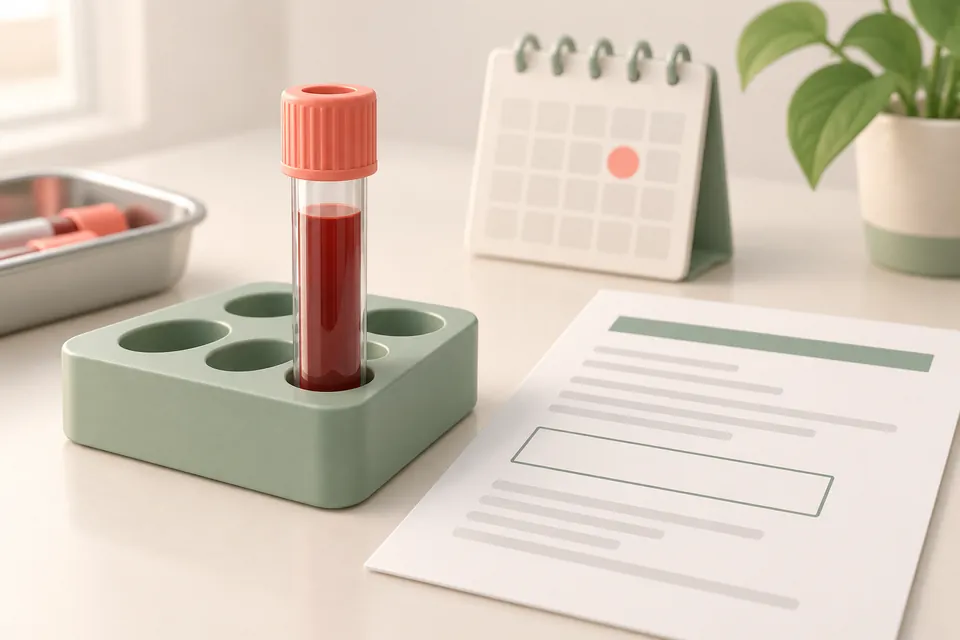
A blood test measures hCG to see whether the embryo has implanted. If it is positive, a second test shows whether the level is rising as expected, and an early scan follows. If it is negative, your doctor talks you through what happened and the options from here.

Illustration of a blood sample tube, a calendar and a report for the pregnancy test
Illustration

Good to know

  • Home tests can mislead this early, so wait for the blood test
  • If a cycle does not work, a review can help plan the next one
Is my hCG rising normally? →

One IVF cycle, day by day

A typical cycle with a fresh day-5 embryo transfer.

Day 1Injections start
Day 12Egg collection
Day 17Embryo transfer
Day 26Pregnancy test

Your own timings depend on your protocol and how you respond. Work out your cycle timeline →

Your first visit

What to bring

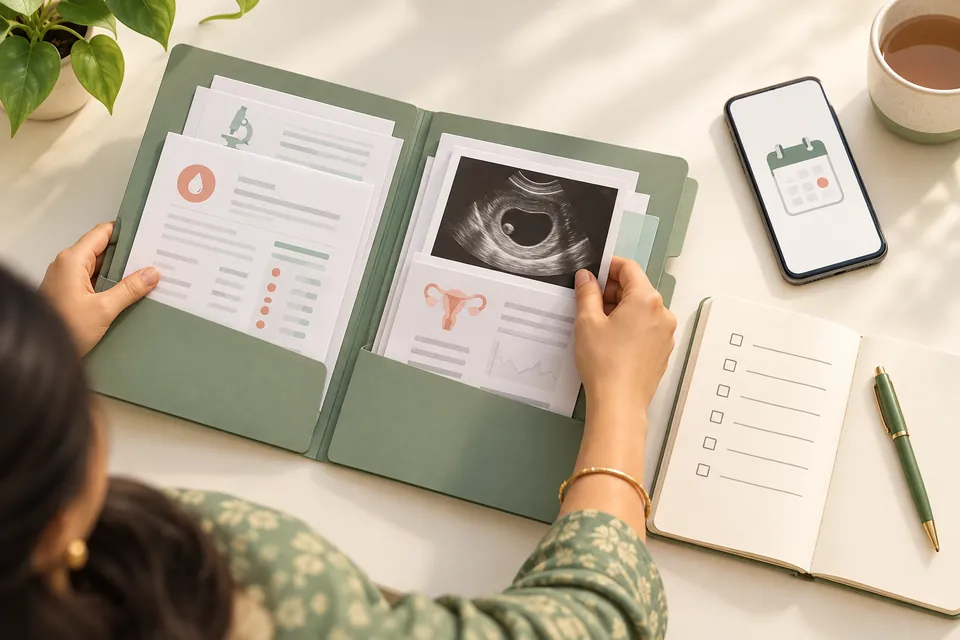
  • Previous scans, blood reports and treatment summaries, for both partners if you have them
  • A list of any medicines you take
  • Dates of your last few periods
  • Your questions. Write them down, so nothing is forgotten
Illustration of a patient organising reports and a list of questions before a first visit
Illustration

The doctors you will meet

Fertility and gynaecology specialists across our clinics.

See qualifications and timings →

Prepare with our free tools

Check a result or plan ahead, in a minute, with no sign-up.

Questions people ask

How long does IVF take?

The treatment cycle itself takes about four weeks, from the first injection to the pregnancy test. Allow one to two weeks before that for your first consultation, tests and plan.

How many clinic visits will I need?

Most people come in for a few monitoring scans during stimulation, then for egg collection and embryo transfer. Your plan lists your own visits, so you can arrange time off in advance.

Does egg collection hurt?

It is done under sedation, so most people feel little during it. Mild cramping or bloating for a day or two afterwards is common. Contact your clinic if pain is severe.

Can I keep working during IVF?

Most people keep working through stimulation. Plan to take the day of egg collection off, and the day after if you can.

What is the difference between IVF and ICSI?

In IVF, eggs and sperm are placed together and fertilisation happens on its own. In ICSI, one sperm is injected into each egg. ICSI is often used when sperm numbers or movement are low. Your doctor will say which suits you.

What are my chances of success?

Age matters most, along with egg reserve, sperm quality and any previous treatment. Your doctor will give you a realistic range at the planning visit. Our IVF success rate calculator shows typical figures by age.

How much does IVF cost?

It depends on the medicines, whether ICSI or genetic testing is needed, and embryo freezing. Ask for the full cost at your planning visit. Our IVF cost calculator shows what is usually included.

Do both partners need to come?

It helps if both partners come to the first consultation, because tests are done for both. If that is not possible, one partner can start and the other can join later.

Ready to talk it through?

Book a consultation at any of our three clinics, or message us on WhatsApp.