PGT-A testing: checking embryos for chromosome problems
PGT-A testing checks a few cells taken from a day-5 embryo for missing or extra chromosomes before transfer. It can help avoid transferring embryos unlikely to lead to a baby, but it has not been shown to raise the overall chance of a live birth from a cycle for most patients.
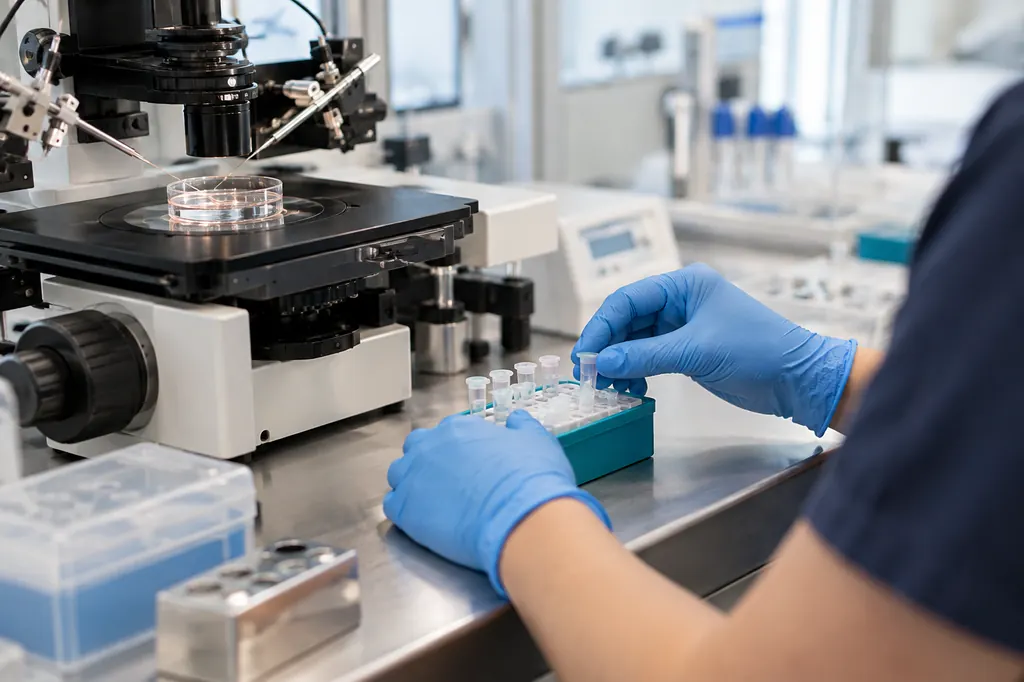
- Biopsy
- Day 5–6 blastocyst
- Results
- Usually 1–3 weeks
- Transfer
- Frozen embryo transfer afterwards
- Evidence rating
- Mixed — not routine
What is PGT-A testing?
Many embryos that do not implant, or that miscarry, have the wrong number of chromosomes (aneuploidy). This becomes more common as the woman's age rises. PGT-A analyses a few cells from the outer layer of a blastocyst to estimate whether the embryo has the expected 46 chromosomes.
It is important to understand what PGT-A is not. It is not a test for most inherited diseases (that is PGT-M), it does not choose sex (illegal in India), and it cannot make embryos healthier. In India its use is also limited by law to screening for known heritable or genetic disease.
Who PGT-A may help
- A parent with a known chromosome rearrangement (PGT-SR)
- A known inherited genetic disease in the family (PGT-M)
- Recurrent miscarriage, after specialist assessment (evidence and legal basis to be discussed)
- Repeated implantation failure (evidence limited)
Good to know. Indian law limits embryo testing. Section 25 of the ART Act 2021 says pre-implantation genetic testing may be used only to screen embryos for known, pre-existing, heritable or genetic diseases, and Section 26 bans any test or act to choose or find out the baby's sex. Testing embryos for chromosome problems because of age alone may not be permitted, so ask your clinic to explain the legal basis before agreeing.
How to prepare
- Ask your clinic which genetic condition it is screening for and the legal basis under the ART Act 2021.
- Ask how it reports and handles 'mosaic' results.
- Plan for a frozen embryo transfer in a later cycle.
- Consider genetic counselling before deciding.
How PGT-A testing is done
IVF and blastocyst culture
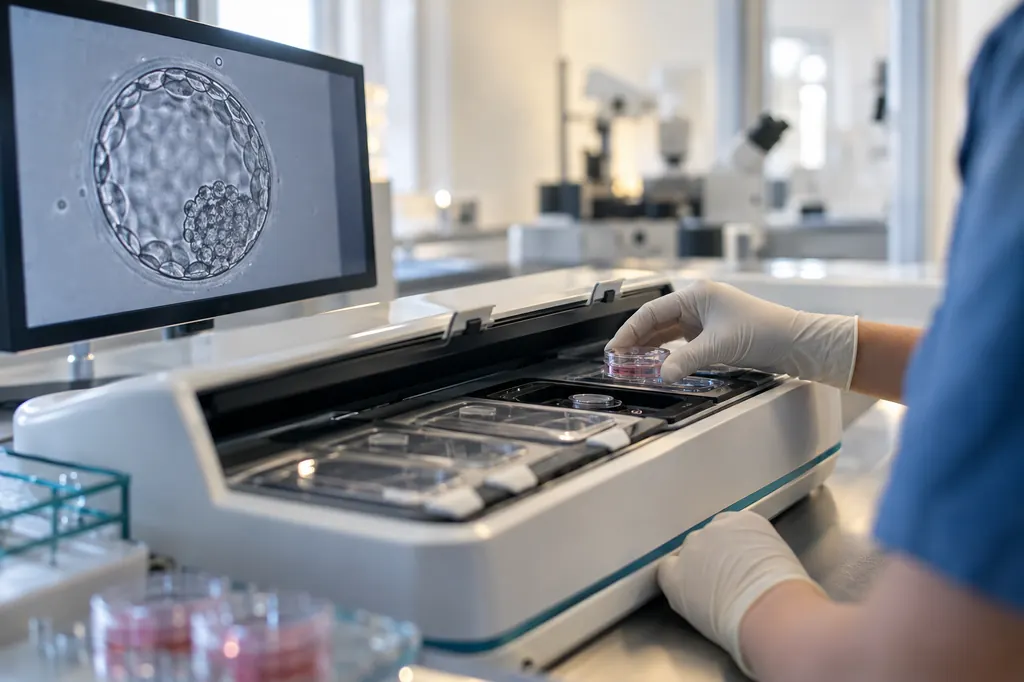
Embryos are grown to day 5–6.
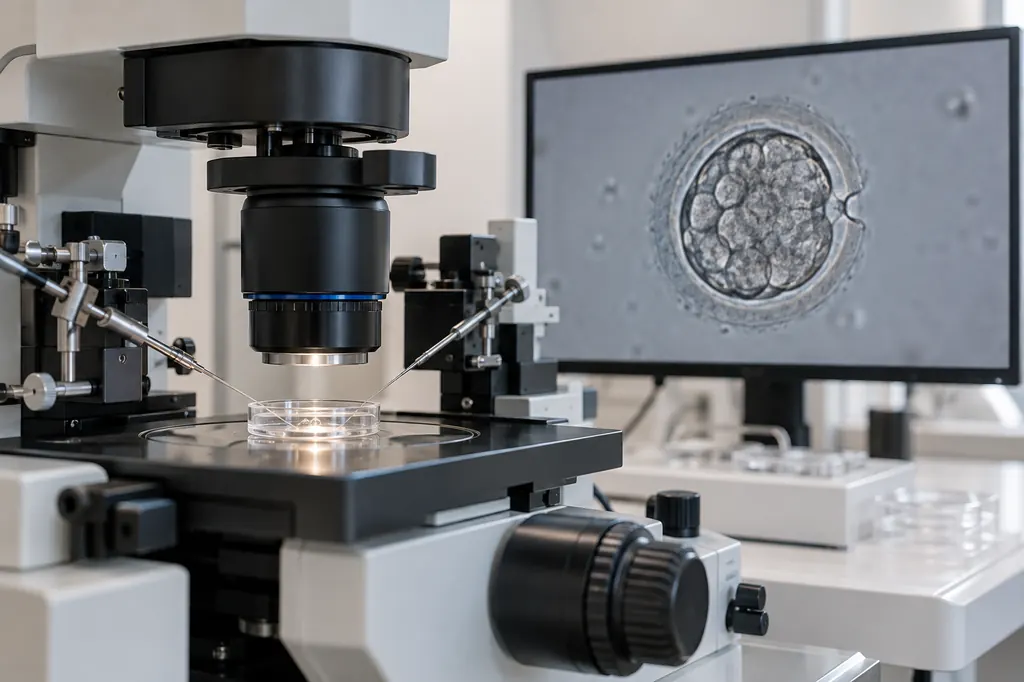
Biopsy
A few cells are taken from the outer layer that forms the placenta.
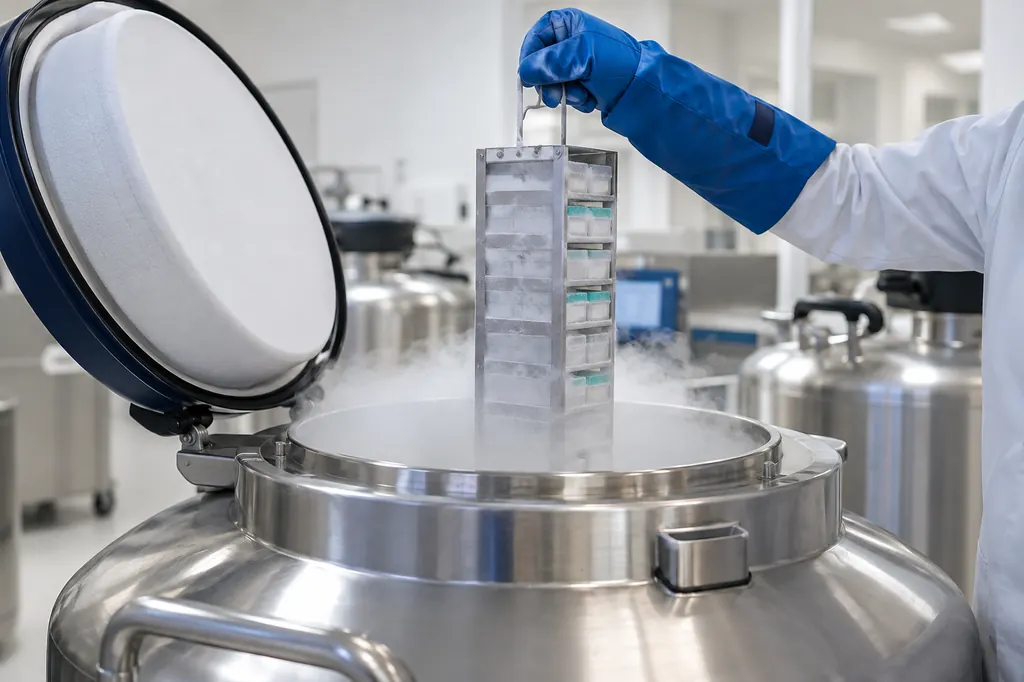
Freezing
All embryos are frozen while the lab tests the cells.
Report
Each embryo is reported as euploid, aneuploid or mosaic.
Frozen transfer
A euploid embryo is thawed and transferred in a later cycle.
What to expect
- You will need a frozen embryo transfer cycle after the results.
- Some cycles end with no euploid embryo, which is hard news but saves transfers that would likely fail.
After testing
- Results usually arrive in 1–3 weeks.
- Euploid embryos are stored until a frozen transfer is arranged.
- Prenatal screening in pregnancy is still recommended.
Benefits, limitations and risks
Benefits
- May reduce transfers that end in miscarriage
- Can shorten time to pregnancy for some patients with several blastocysts
- Essential when a known genetic condition must be avoided (as PGT-M or PGT-SR)
Limitations
- Does not increase the total chance of a baby from one cycle for most patients
- False or unclear results are possible
- Adds biopsy, freezing and frozen transfer costs
- Restricted in India to known heritable or genetic disease
Risks and side effects
- Biopsy can occasionally damage an embryo.
- Results can be wrong or unclear, especially 'mosaic' embryos, some of which can lead to healthy babies.
- Embryos that could have become a baby may be discarded.
- Significant extra cost.
What affects success
PGT-A can raise the success rate per transfer and reduce miscarriage, because fewer embryos are transferred. It does not create more healthy embryos, so the chance of a baby from the whole cycle is usually not higher.
Alternatives to discuss
What affects the cost of PGT-A in Bangalore
- Biopsy and laboratory test fee, usually per embryo
- Freezing and storage
- A separate frozen embryo transfer cycle
Before you start, ask for a written, itemised estimate that lists what is included and what could cost extra, such as medicines, freezing, storage and add-ons. Prices vary widely between clinics and cities. Estimate your costs with our calculator.
Questions to ask your doctor
- What will you do with mosaic embryos?
- What is the total extra cost, including freezing and a frozen transfer?
- Would PGT-A change our overall chance of a baby, or only the chance per transfer?
Frequently asked questions
What is the full form of PGT-A?
PGT-A stands for pre-implantation genetic testing for aneuploidy, meaning testing embryos for an abnormal number of chromosomes before transfer.
Can PGT-A tell us the baby's sex?
The test can detect sex chromosomes, but disclosing or using that information to choose sex is illegal in India. Registered clinics will not do it.
Does PGT-A guarantee a healthy baby?
No. It looks only at chromosome number. It does not test for most genetic diseases, and prenatal screening is still recommended in pregnancy.
Is PGT-A allowed in India?
The ART Act 2021 allows pre-implantation genetic testing only to screen embryos for known, pre-existing, heritable or genetic diseases. Ask your clinic which condition it is testing for and the legal basis before agreeing to PGT-A.
What is a mosaic embryo?
An embryo where the tested cells show a mix of normal and abnormal chromosome numbers. Some mosaic embryos lead to healthy babies, so how they are handled needs careful discussion.
Does PGT-A harm the embryo?
Biopsy of a few outer cells is generally well tolerated, but there is a small risk of damage.
Not sure if PGT-A is right for you?
See a fertility doctor at an IVF Pulse centre in Bangalore: Kalyan Nagar (HRBR Layout), RR Nagar and Rajajinagar (at Tamara Hospital). Nothing to pay when you book, and you can change the time on WhatsApp.