
Progesterone blood test
Quick answer: A progesterone test measures progesterone, a hormone made mainly after ovulation that prepares the womb lining for pregnancy. It is used to confirm ovulation, usually about a week before the next expected period, and to monitor early pregnancy or fertility treatment.
- SampleBlood
- TakesAbout 5 minutes
- Before the testThe timing matters, so give the sample on the day your doctor advises, often about 7 days before your next expected period.
- In fertility careIt confirms whether you ovulated in a cycle and helps doctors plan and support the luteal phase in IVF and frozen embryo transfers.
How the test is done
- 1You come on the cycle day your doctor gave you, often about 7 days before your next period
- 2Staff note your cycle day or pregnancy week on the form
- 3Blood is drawn from a vein in your arm
- 4A plaster is applied, and the test may be repeated in a later cycle
What your results can mean
Reading your report
Progesterone changes through the cycle and in pregnancy, so the result depends on when it was taken; discuss it with your doctor.
If the result is outside the usual range
A low level in the second half of the cycle can mean ovulation did not happen that cycle or the sample was taken on the wrong day, and in early pregnancy it can be one sign that needs closer follow-up. Higher levels are expected after ovulation and in pregnancy, and can also be seen with progesterone medicines.
Who usually has this test
Women checking whether they ovulate, women having fertility treatment or frozen embryo transfer, and some women in early pregnancy.
Risks and aftercare
There is nothing special to do after the test.
Names and options
Also called: serum progesterone, day 21 progesterone, P4 test
Listed by the hospital as
- PROGESTERONE, SERUM
Where this test fits in fertility care
- 1Fertility work-up
- 2Screening before IVF or IUI
- 3During treatmentThis test
- 4After embryo transfer
- 5Pregnancy check-ups
- 6If treatment has not worked
The usual order. See every test at each stage →
Questions about this test
Why is it called a day 21 progesterone test?
In a 28-day cycle, ovulation happens around day 14, so progesterone peaks around day 21. If your cycle is longer or shorter, the test should be done about 7 days before your next expected period instead.
Does low progesterone mean I cannot get pregnant?
A low result may mean you did not ovulate that cycle or that the test was taken on the wrong day. It does not mean you cannot get pregnant. Your doctor may repeat it or suggest treatment to help ovulation.
Do progesterone pessaries or injections affect the blood test?
Yes. Progesterone given as injections, tablets or vaginal medicine during IVF or early pregnancy can change your blood level. Tell staff what you are using so your doctor can read the result correctly, and keep taking it as prescribed.
Related tests
Tamara Hospital & IVF Centre, Rajajinagar
34/3, 10th Cross Road, opp. Vardhaka Sardar Patel School, 1st N Block, 2nd Stage, Rajajinagar, Bengaluru 560010
The hospital is open 24 hours. Call before you come to check the timing for your scan or sample collection.
Get directions ↗IVF Pulse fertility care at Tamara Hospital →
 Reception
 Waiting area
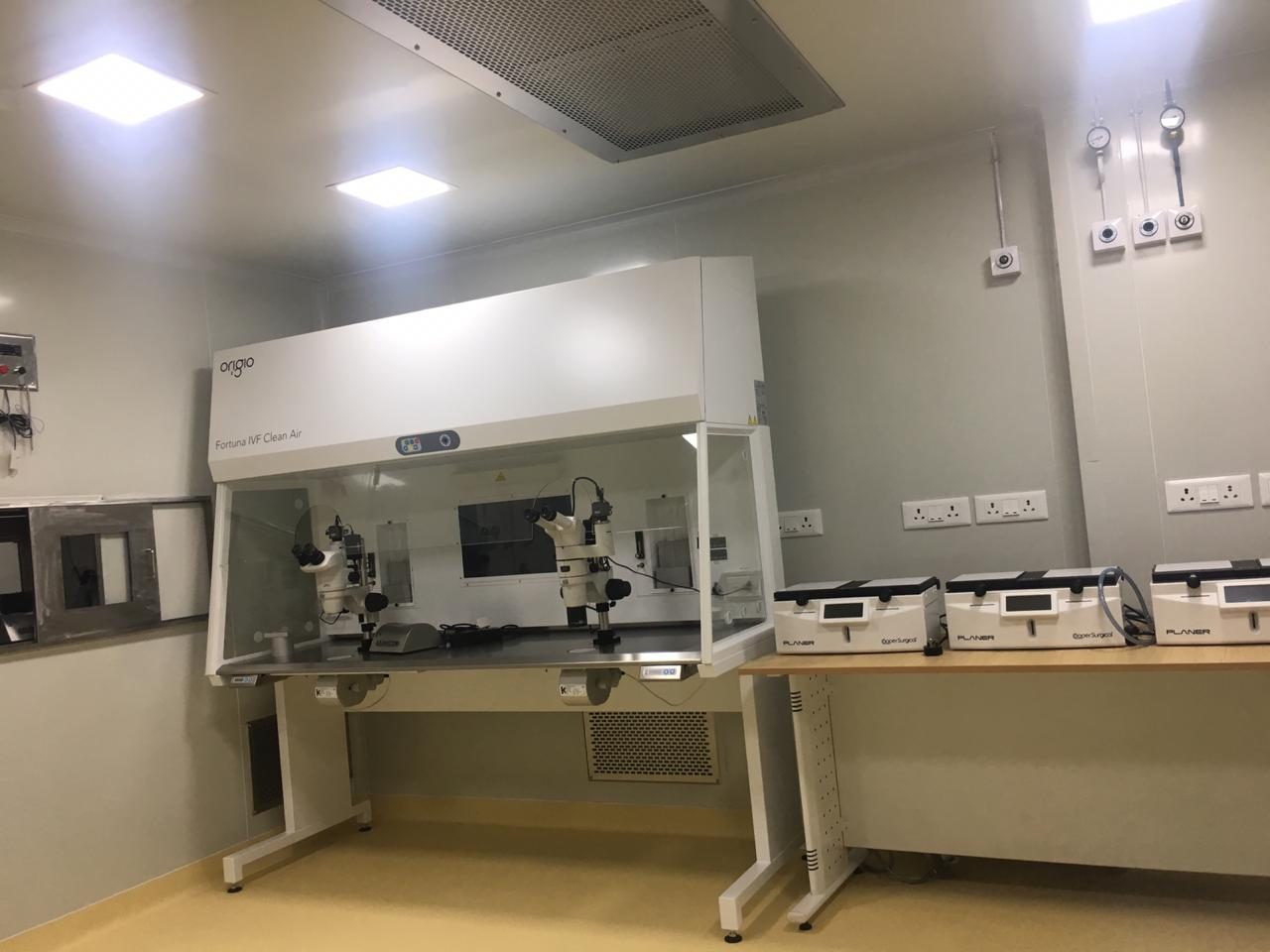 IVF lab
This page explains each test in general terms so you know what to expect. It is not medical advice: your doctor decides which tests you need and what your results mean. Reference ranges differ between laboratories. Updated 4 November 2026.