
Total complement (CH50) test
Quick answer: A CH50 test measures the overall activity of the complement system, part of your immune defence. Doctors order it to look for complement deficiency in repeated infections or to monitor autoimmune conditions such as lupus.
- SampleBlood
- TakesAbout 5 minutes
- Before the testNo special preparation is usually needed.
How the test is done
- 1You sit and a band is tied around your arm
- 2A needle draws blood into a tube
- 3The sample is kept cool and sent to the lab quickly
- 4The lab tests how well your complement system works overall
What your results can mean
Reading your report
Normal ranges differ between labs and by age and sex, so discuss your result with your doctor.
If the result is outside the usual range
A low result can be seen with an inherited complement deficiency or when complement is used up, as in active lupus. A very low result often leads to tests of individual complement parts.
Who usually has this test
People with repeated serious infections, especially meningitis-type infections, and people with lupus or similar conditions.
Risks and aftercare
There is little to do afterwards apart from watching for a bruise.
Names and options
Also called: CH50, total haemolytic complement
Listed by the hospital as
- CH-50 (COMPLEMENT TOTAL), SERUM
Questions about this test
How is CH50 different from C3 and C4?
C3 and C4 measure the amount of two complement proteins. CH50 checks whether the whole complement pathway works, which can pick up a missing part.
Why must the CH50 sample be handled quickly?
Complement activity falls if the sample sits at room temperature. Poor handling can give a falsely low result.
Who needs a CH50 test?
It is useful for people with repeated serious infections or suspected complement deficiency, and in some autoimmune conditions.
Related tests
Tamara Hospital & IVF Centre, Rajajinagar
34/3, 10th Cross Road, opp. Vardhaka Sardar Patel School, 1st N Block, 2nd Stage, Rajajinagar, Bengaluru 560010
The hospital is open 24 hours. Call before you come to check the timing for your scan or sample collection.
Get directions ↗IVF Pulse fertility care at Tamara Hospital →
 Reception
 Waiting area
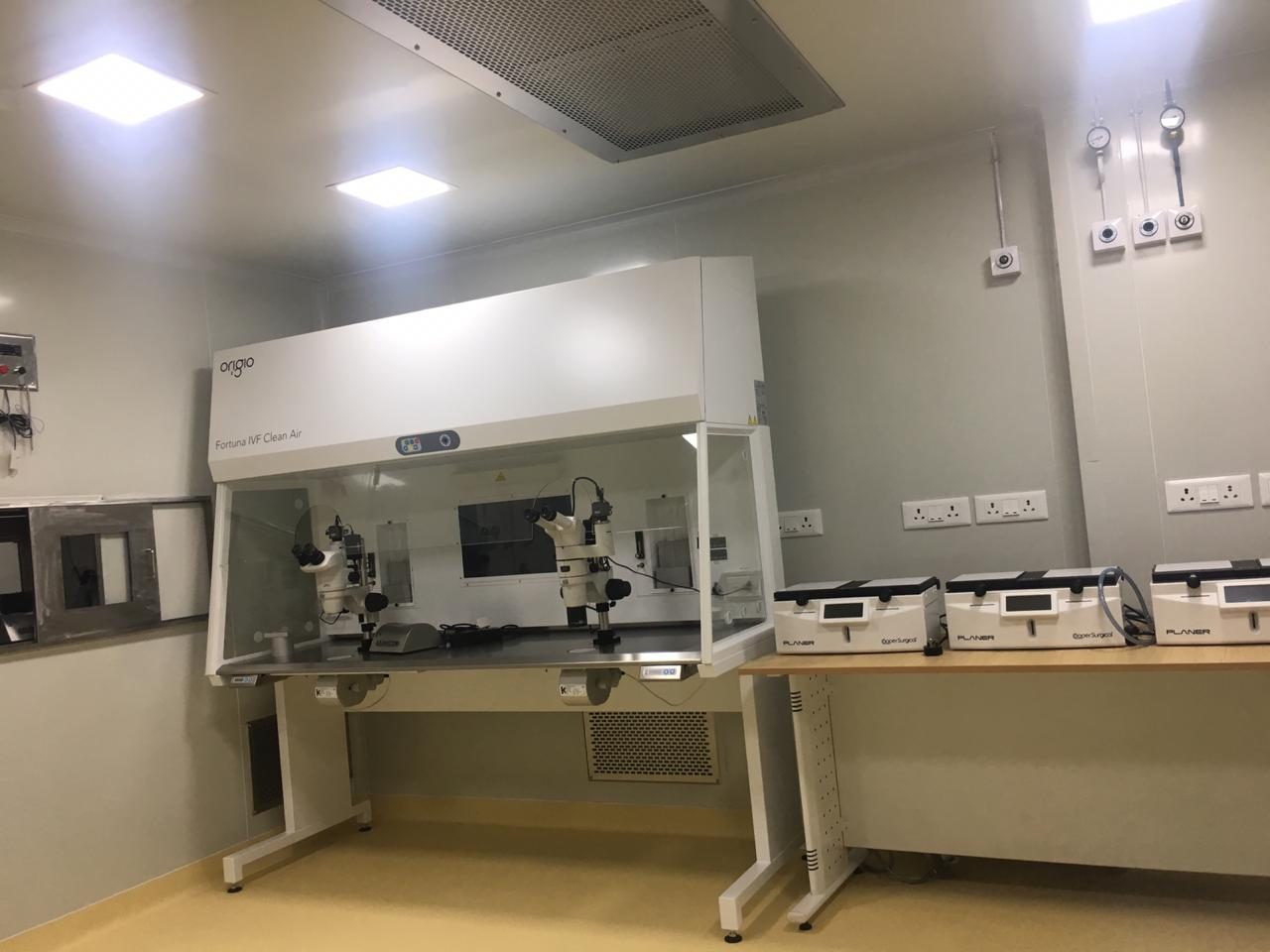 IVF lab
This page explains each test in general terms so you know what to expect. It is not medical advice: your doctor decides which tests you need and what your results mean. Reference ranges differ between laboratories. Updated 4 November 2026.