
Beta hCG blood test
Quick answer: A beta hCG test measures human chorionic gonadotropin, the hormone made after an embryo implants, to confirm pregnancy and track how it is progressing. Doctors order it to confirm pregnancy, after IVF or IUI on the advised date, to follow early pregnancy, and to check for ectopic pregnancy or miscarriage.
- SampleBlood
- TakesAbout 5 minutes
- Before the testNo special preparation is usually needed; after fertility treatment, wait for the test day your clinic gives you.
- In fertility careAfter an embryo transfer, a beta hCG test on the advised day shows whether implantation has happened, and repeat tests show if levels are rising as expected.
How the test is done
- 1You come on the date your clinic gives, often in the morning
- 2The inside of your elbow is cleaned
- 3A needle draws blood into a tube
- 4Your clinic may ask you to repeat the test after 48 to 72 hours
What your results can mean
Reading your report
One value matters less than how it changes over 48 to 72 hours, so your doctor will usually compare two results.
If the result is outside the usual range
A rising level over 48 to 72 hours is usually seen in a progressing early pregnancy. A slow rise, plateau or fall can be seen with an ectopic pregnancy or miscarriage, and a very high level with twins or, rarely, a molar pregnancy.
Who usually has this test
Women after IVF, IUI or embryo transfer, women with a missed period or early pregnancy symptoms, and women being checked for ectopic pregnancy or miscarriage.
Risks and aftercare
A small bruise may form; if you have pain or bleeding after fertility treatment, contact your clinic.
Names and options
Also called: beta hCG, pregnancy blood test, serum hCG, quantitative hCG
Listed by the hospital as
- BETA HCG, SERUM
Where this test fits in fertility care
- 1Fertility work-up
- 2Screening before IVF or IUI
- 3During treatment
- 4After embryo transferThis test
- 5Pregnancy check-ups
- 6If treatment has not worked
The usual order. See every test at each stage →
Questions about this test
When should I do a beta hCG test after embryo transfer?
Most clinics advise a blood test about 9 to 14 days after transfer, depending on the embryo's age. Testing too early can give a falsely low or negative result. Follow the date your clinic gives you.
Why does my doctor want a repeat beta hCG test?
In early pregnancy hCG usually rises quickly, so comparing two results 48 to 72 hours apart shows whether the pregnancy is progressing. A slow rise or fall needs follow-up with your doctor and a scan.
Can an hCG trigger injection affect my result?
Yes. The trigger injection contains hCG and can show up in tests for some days afterwards. Your clinic times the test so that the trigger has cleared.
Related tests
Tamara Hospital & IVF Centre, Rajajinagar
34/3, 10th Cross Road, opp. Vardhaka Sardar Patel School, 1st N Block, 2nd Stage, Rajajinagar, Bengaluru 560010
The hospital is open 24 hours. Call before you come to check the timing for your scan or sample collection.
Get directions ↗IVF Pulse fertility care at Tamara Hospital →
 Reception
 Waiting area
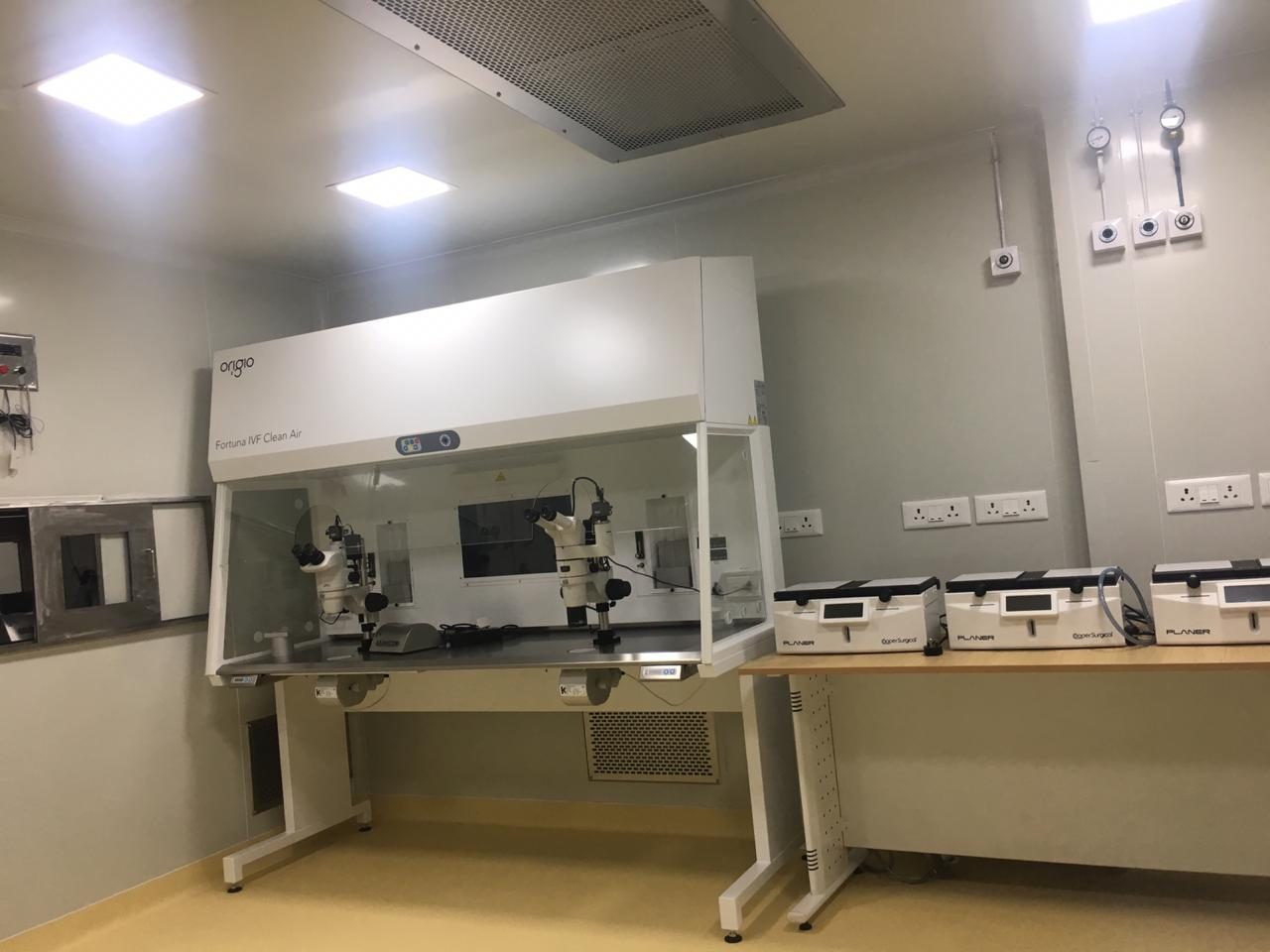 IVF lab
This page explains each test in general terms so you know what to expect. It is not medical advice: your doctor decides which tests you need and what your results mean. Reference ranges differ between laboratories. Updated 4 November 2026.